
History & rebuilding
Explore ancient cities, the modern state, conflict, displacement and rebuilding.
Ancient cities and long-term change
Mesopotamia is central to studying early urbanism, writing, administration and irrigation. Sumerian, Babylonian and Assyrian names refer to different periods and polities, not one unchanged state. Modern Iraq’s borders differ from ancient political spaces. Sites, museum objects and written records provide complementary evidence of urban form, economy and belief. Baghdad, Mosul and Samarra have histories extending far beyond recent wars.
Sources & licences · 2
Ministry of Commerce of China; CAITEC; Embassy of China in Iraq · 对外投资合作国别(地区)指南:伊拉克(2025年版)
- Coverage
- Cited background only; see dated evidence capture. Current statistics are separate fact records.
- Source publication date
- —
- Source read date
- 2026-10-13
- Last content verification
- 2026-10-13T01:05:50.400521+00:00
- Content revision
- —
- Licence
- Unverified
UNESCO World Heritage Centre · Iraq: World Heritage and Tentative List
- Coverage
- Cited background only; see dated evidence capture. Current statistics are separate fact records.
- Source publication date
- —
- Source read date
- 2026-10-13
- Last content verification
- 2026-10-13T00:40:58.855863+00:00
- Content revision
- —
- Licence
- Unverified
Mesopotamia and historical geography
The Tigris and Euphrates provide a starting point for Iraq’s history. UNESCO’s southern Ahwar heritage property includes the remains of Uruk, Ur and Eridu, connecting ancient settlement with landscape. These remains illuminate successive societies rather than a single uninterrupted modern national identity.
Sources & licences · 1
UNESCO · 伊拉克南部湿地与两河流域城市 · UNESCO · 伊拉克南部湿地与两河流域城市
- Coverage
- Cited background claims only; evidence/captures.json records capture method and limitations
- Source publication date
- —
- Source read date
- 2026-10-13
- Last content verification
- 2026-10-12T16:59:12.242002+00:00
- Content revision
- —
- Licence
- Unverified
1980–1988 · Iran–Iraq War
Iraqi forces invaded Iran on 22 September 1980, beginning full-scale war amid border disputes, contest over the Shatt al-Arab and regional rivalry. Years of fighting caused casualties, damaged infrastructure and consumed public resources. The UN-supported ceasefire took effect on 20 August 1988. Missing persons, prisoners and reconstruction needs did not disappear with the ceasefire.
Sources & licences · 3
联合国 · 两伊战争与停火 · 联合国 · 两伊战争与停火
- Coverage
- Cited background claims only; evidence/captures.json records capture method and limitations
- Source publication date
- —
- Source read date
- 2026-10-13
- Last content verification
- 2026-10-12T16:59:28.539361+00:00
- Content revision
- —
- Licence
- Unverified
红十字国际委员会 · 伊拉克十五年流离失所 · 红十字国际委员会 · 伊拉克十五年流离失所
- Coverage
- Cited background claims only; evidence/captures.json records capture method and limitations
- Source publication date
- —
- Source read date
- 2026-10-13
- Last content verification
- 2026-10-12T16:59:50.757149+00:00
- Content revision
- —
- Licence
- Unverified
Australian Department of Veterans’ Affairs · Australian peacekeepers in Iran and Iraq with UNIIMOG 1988 to 1990
- Coverage
- Cited historical chronology or attribution of 2016 inquiry findings; not a current security assessment
- Source publication date
- —
- Source read date
- 2026-10-13
- Last content verification
- 2026-10-12T17:34:27.938462+00:00
- Content revision
- —
- Licence
- Unverified
1990–1991 · Gulf War
Iraq invaded Kuwait in August 1990 after disputes involving war debts, oil revenue and territory. A US-led coalition conducted military operations in January and February 1991, forcing Iraqi withdrawal. Bombing damaged power and refining facilities. Sanctions, reparations and repression after the war further affected the economy and civilian life.
Sources & licences · 2
美国国务院历史办公室 · 海湾战争 · 美国国务院历史办公室 · 海湾战争
- Coverage
- Cited background claims only; evidence/captures.json records capture method and limitations
- Source publication date
- —
- Source read date
- 2026-10-13
- Last content verification
- 2026-10-12T16:59:33.542131+00:00
- Content revision
- —
- Licence
- Unverified
红十字国际委员会 · 伊拉克十五年流离失所 · 红十字国际委员会 · 伊拉克十五年流离失所
- Coverage
- Cited background claims only; evidence/captures.json records capture method and limitations
- Source publication date
- —
- Source read date
- 2026-10-13
- Last content verification
- 2026-10-12T16:59:50.757149+00:00
- Content revision
- —
- Licence
- Unverified
2003–2011 · Invasion and prolonged conflict
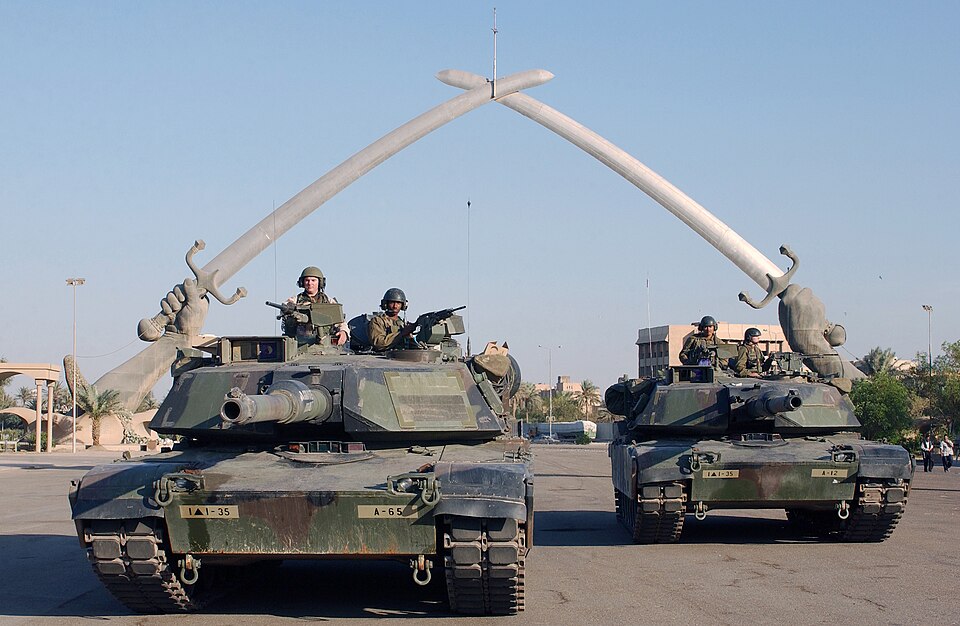
The war followed the post-9/11 debate over terrorism and alleged weapons of mass destruction. A US- and UK-led coalition invaded Iraq in March 2003 and overthrew Saddam Hussein’s government after taking Baghdad in April. The conflict continued beyond regime change. Occupation, insurgency and political restructuring disrupted services and displaced families. The main US withdrawal in 2011 was a phase boundary, not the end of all subsequent conflict. Findings of the UK Iraq Inquiry in 2016 identified greater certainty in public government statements than in intelligence assessments. Arguments used before war must be distinguished from later findings.
Sources & licences · 4
美国国务院历史办公室 · 2003 年伊拉克战争 · 美国国务院历史办公室 · 2003 年伊拉克战争
- Coverage
- Cited background claims only; evidence/captures.json records capture method and limitations
- Source publication date
- —
- Source read date
- 2026-10-13
- Last content verification
- 2026-10-12T16:59:39.522419+00:00
- Content revision
- —
- Licence
- Unverified
红十字国际委员会 · 伊拉克十五年流离失所 · 红十字国际委员会 · 伊拉克十五年流离失所
- Coverage
- Cited background claims only; evidence/captures.json records capture method and limitations
- Source publication date
- —
- Source read date
- 2026-10-13
- Last content verification
- 2026-10-12T16:59:50.757149+00:00
- Content revision
- —
- Licence
- Unverified
联合国 · 2011 年美军撤离声明 · 联合国 · 2011 年美军撤离声明
- Coverage
- Cited background claims only; evidence/captures.json records capture method and limitations
- Source publication date
- 2011-12-20
- Source read date
- 2026-10-13
- Last content verification
- 2026-10-12T16:59:56.080530+00:00
- Content revision
- —
- Licence
- Unverified
UK Government · PM statement on the Iraq Inquiry: 6 July 2016
- Coverage
- Cited historical chronology or attribution of 2016 inquiry findings; not a current security assessment
- Source publication date
- —
- Source read date
- 2026-10-13
- Last content verification
- 2026-10-12T17:34:27.939132+00:00
- Content revision
- —
- Licence
- Unverified
2006–2008 · Sectarian violence
Religious difference alone does not explain Iraq’s conflicts. Changes in power, armed competition and insecurity after 2003 interacted. The bombing of Al-Askari Shrine in Samarra in February 2006 intensified sectarian violence. The severe 2006–2008 phase involved attacks, reprisals and forced displacement that transformed mixed neighbourhoods and damaged homes, livelihoods and community relationships.
Sources & licences · 2
UNHCR · 伊拉克教派暴力与流离失所 · UNHCR · 伊拉克教派暴力与流离失所
- Coverage
- Cited background claims only; evidence/captures.json records capture method and limitations
- Source publication date
- —
- Source read date
- 2026-10-13
- Last content verification
- 2026-10-12T16:59:45.508689+00:00
- Content revision
- —
- Licence
- Unverified
红十字国际委员会 · 伊拉克十五年流离失所 · 红十字国际委员会 · 伊拉克十五年流离失所
- Coverage
- Cited background claims only; evidence/captures.json records capture method and limitations
- Source publication date
- —
- Source read date
- 2026-10-13
- Last content verification
- 2026-10-12T16:59:50.757149+00:00
- Content revision
- —
- Licence
- Unverified
2014–2017 · War against ISIS
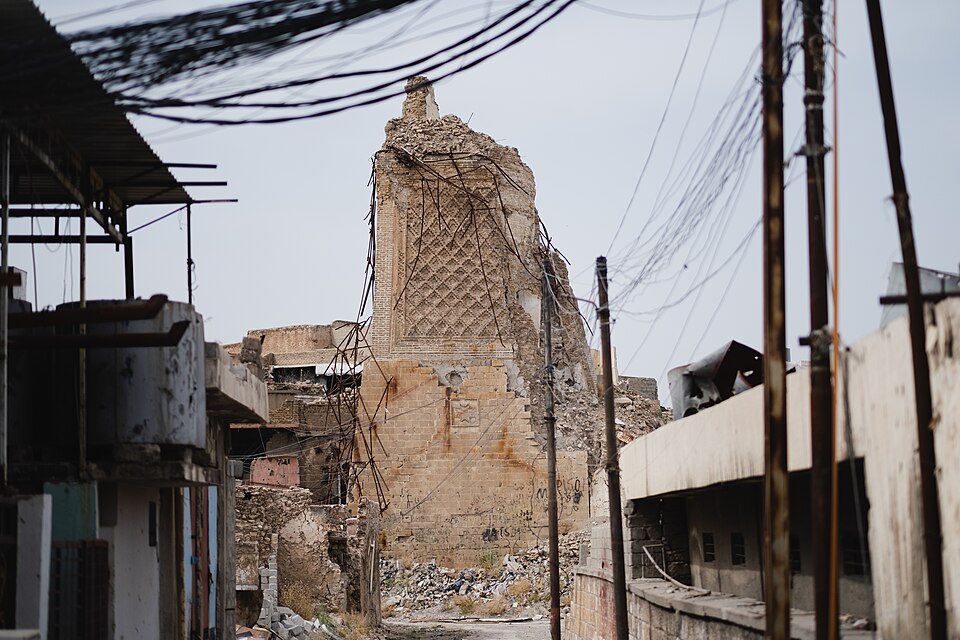
ISIS seized Mosul and other areas in 2014, persecuted communities including Yazidis, and damaged heritage. Iraqi forces, Kurdish forces and others fought to recover territory with international support. Mosul was retaken in 2017, and Iraq declared military victory that year. Territorial defeat did not eliminate ISIS remnants or insecurity; destruction and explosive hazards continued to impede return and reconstruction.
Sources & licences · 2
UNESCO · 重振摩苏尔精神 · UNESCO · 重振摩苏尔精神
- Coverage
- Cited background claims only; evidence/captures.json records capture method and limitations
- Source publication date
- —
- Source read date
- 2026-10-13
- Last content verification
- 2026-10-12T16:59:18.248663+00:00
- Content revision
- —
- Licence
- Unverified
红十字国际委员会 · 伊拉克十五年流离失所 · 红十字国际委员会 · 伊拉克十五年流离失所
- Coverage
- Cited background claims only; evidence/captures.json records capture method and limitations
- Source publication date
- —
- Source read date
- 2026-10-13
- Last content verification
- 2026-10-12T16:59:50.757149+00:00
- Content revision
- —
- Licence
- Unverified
Reconstruction of buildings and community life
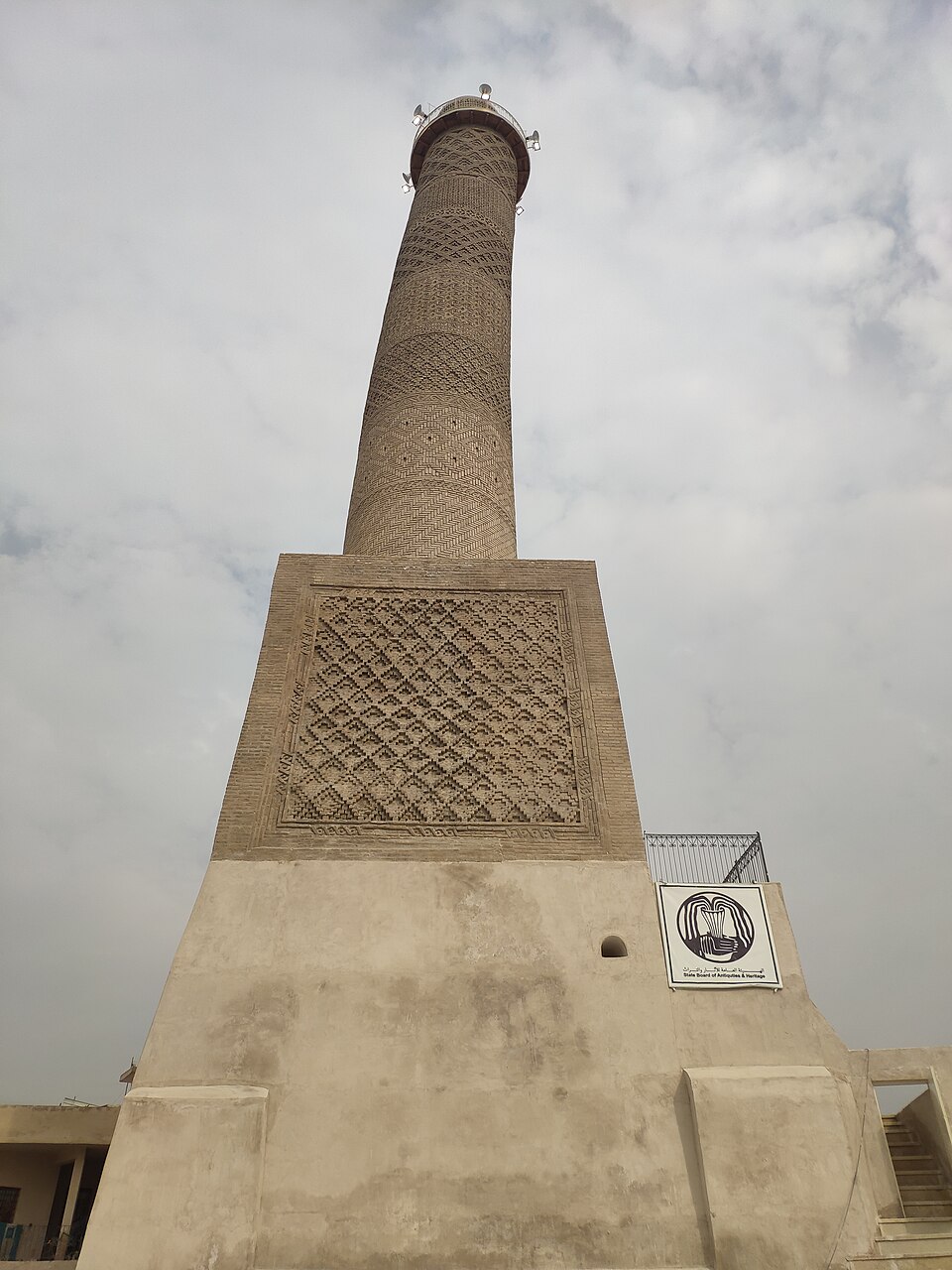
UNESCO’s Mosul initiative addresses mosques, churches, historic houses, cultural activity, schools and skills. Reconstruction can therefore be read as both architectural restoration and recovery of community life. Completion of a landmark does not establish that its surroundings are suitable for tourism or that every displaced resident can return.
Sources & licences · 1
UNESCO · 重振摩苏尔精神 · UNESCO · 重振摩苏尔精神
- Coverage
- Cited background claims only; evidence/captures.json records capture method and limitations
- Source publication date
- —
- Source read date
- 2026-10-13
- Last content verification
- 2026-10-12T16:59:18.248663+00:00
- Content revision
- —
- Licence
- Unverified
Rebuilding places and communities
Reconstruction concerns return, community relationships, craft skills and public space as well as buildings. UNESCO’s Mosul programme links mosques, churches, historic housing and training, connecting conservation with livelihoods and social recovery. Completion, inauguration and routine visiting are different states. Dated photographs document a moment: damage images do not establish current ruin, and a restored landmark does not mean an entire city has recovered.
Sources & licences · 2
UNESCO · Revive the Spirit of Mosul: Heritage
- Coverage
- Cited background only; see dated evidence capture. Current statistics are separate fact records.
- Source publication date
- —
- Source read date
- 2026-10-13
- Last content verification
- 2026-10-13T00:41:11.180404+00:00
- Content revision
- —
- Licence
- Unverified
UNESCO · Mosul inaugurates restored landmarks, September 2025
- Coverage
- Cited background only; see dated evidence capture. Current statistics are separate fact records.
- Source publication date
- —
- Source read date
- 2026-10-13
- Last content verification
- 2026-10-13T00:41:10.465033+00:00
- Content revision
- —
- Licence
- Unverified